
Application · Aluminum
Aluminum alloy analysis.
A good instrument proposal covers the aluminum-based material, the elements and ranges you report, the sample you present and the configuration that fits.
Use this page to prepare that requirement and to review the instruments whose aluminum-based applications appear in their product documents.
The requirement
Build a requirement that can be reviewed.
Your task may be checking a purchased material, supporting production quality control, investigating a material concern or adding a new alloy requirement to an existing setup. State the question the result must answer.
- MaterialThe aluminum-based material and known alloy or grade information.
- Elements and rangesThe elements of interest and the required ranges or acceptance limits, where known.
- Sample formShape, dimensions, condition and how a sample is taken or prepared.
- Existing setupCurrent instrument, calibration configuration and any relevant changes.
- Operating contextWhere testing takes place, who operates the equipment and what support is needed.

Candidate instruments
Spark OES models for aluminum alloys.
Read each model with its own configuration, sample conditions and document version. The Exquis T4 also lists Al among its matrices (Fe, Al, Cu, Zn etc., E-catalogue).
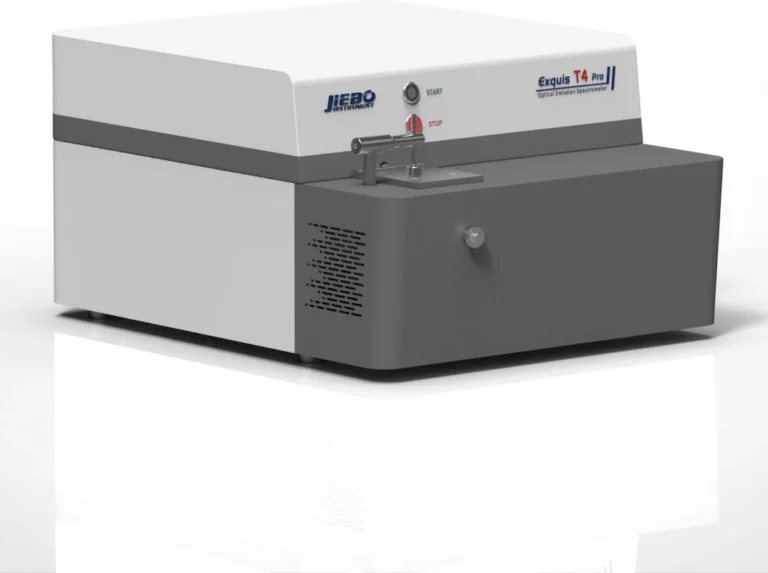
Exquis T4 Pro
The T4 Pro brochure lists Al among the detectable matrices (Fe, Al, Cu, Ni, Co, Mg, Ti, Zn, Pb, Sn, etc.).
View instrument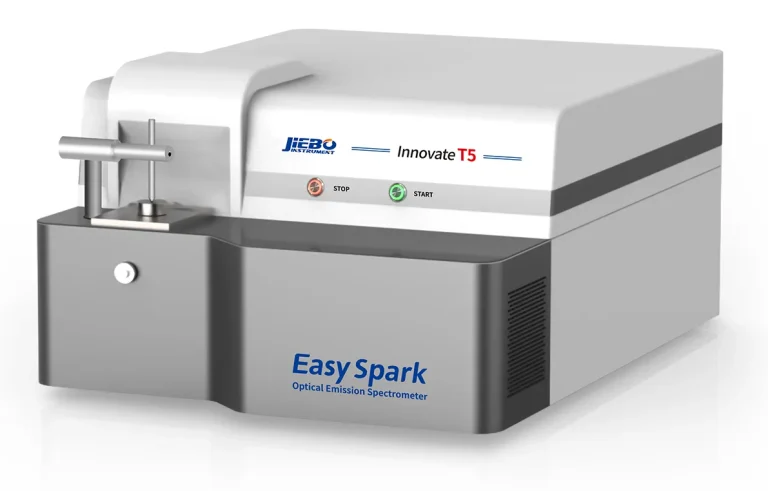
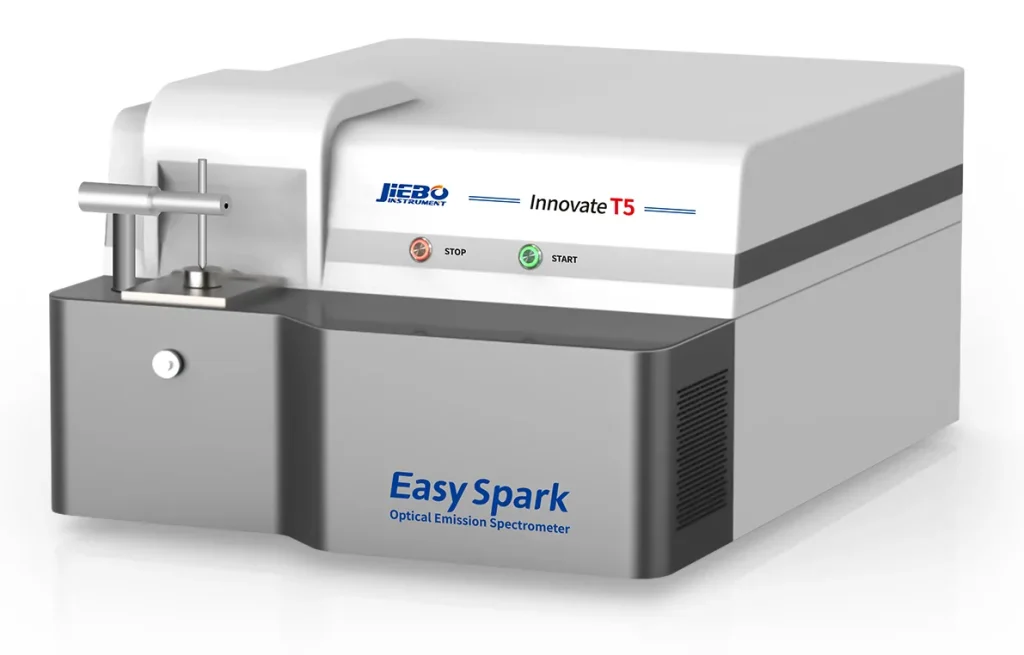
Innovate T5
The T5 brochure and the E-catalogue list Al among the detectable matrices (Fe, Al, Cu, Ni, Co, Mg, Ti, Zn, Pb, Sn, etc.).
View instrument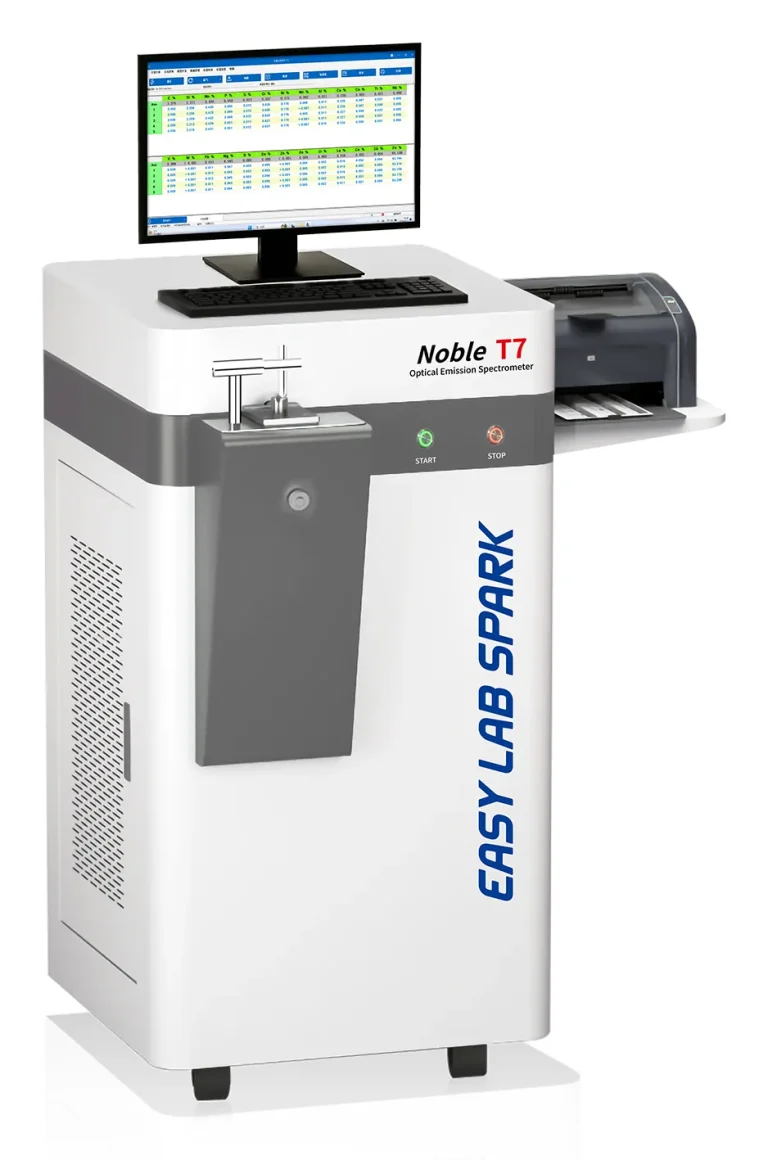
Noble T7
The T7 brochure and the E-catalogue list Al among the detectable matrices (Fe, Al, Cu, Ni, Co, Mg, Ti, Zn, Pb, Sn, etc.).
View instrumentFrom sample to result
A usual path for an aluminum check.
The same steps apply to an incoming check, a production sample and a material review.
- 01Take the sample
A solid piece from the material you need to check.
- 02Prepare the surface
A clean, flat measurement surface.
- 03Measure
Spark OES measurement on the aluminum-base calibration.
- 04Review the result
Read the result against your limits and the decision it supports.
Next steps
Add evidence, or add a requirement.
A sample evaluation addresses a stated requirement with a stated sample and configuration, so the result reads for what it covers. Already running an instrument? Describe the new material, element or range and share the current configuration; we review whether an upgrade fits.
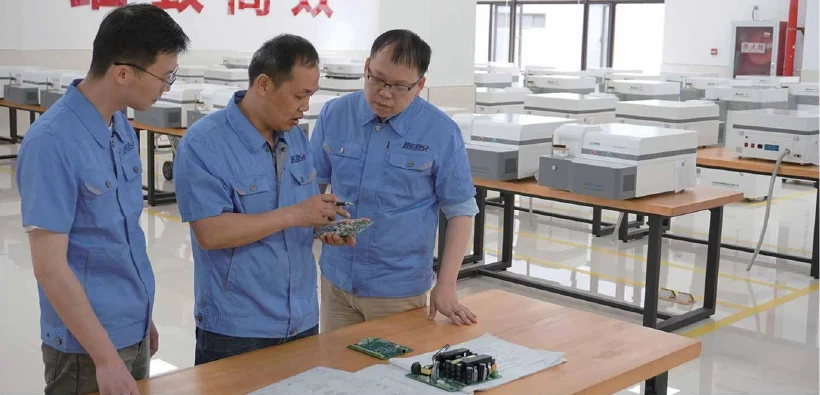
Application records
Related application records.
Example records for this kind of task.
Application record
Incoming Aluminium Alloy Checks for a Component Supplier
An automotive component supplier sets up composition checks for incoming aluminium alloy bar before machining.
Application record
Planning PMI for an Industrial Maintenance Team
An industrial maintenance team defines access, item identities and exception handling for a site inspection.
Application record
Composition Checks for a Foundry in Southeast Asia
A foundry organises sample preparation, measurement records and review before a melt decision.
Knowledge
Articles to read next.
Choosing a Spark Optical Emission Spectrometer for Ferrous and Non-ferrous Alloys: A Practical Checklist Before You Compare Instruments
Start with the material, reporting task and sample conditions before comparing an instrument configuration.
Planning On-site PMI with a Mobile Optical Emission Spectrometer
Prepare the work area, sample access and reporting rules before moving a measurement task to site.
A Practical Workflow for Composition Checks at a Foundry
Build a traceable sequence from sample identification to the decision made from the result.
Start with the material and the measurements you need.
Send the aluminum-based material, target elements, ranges and sample description you have, plus a model or document version if you are comparing options.